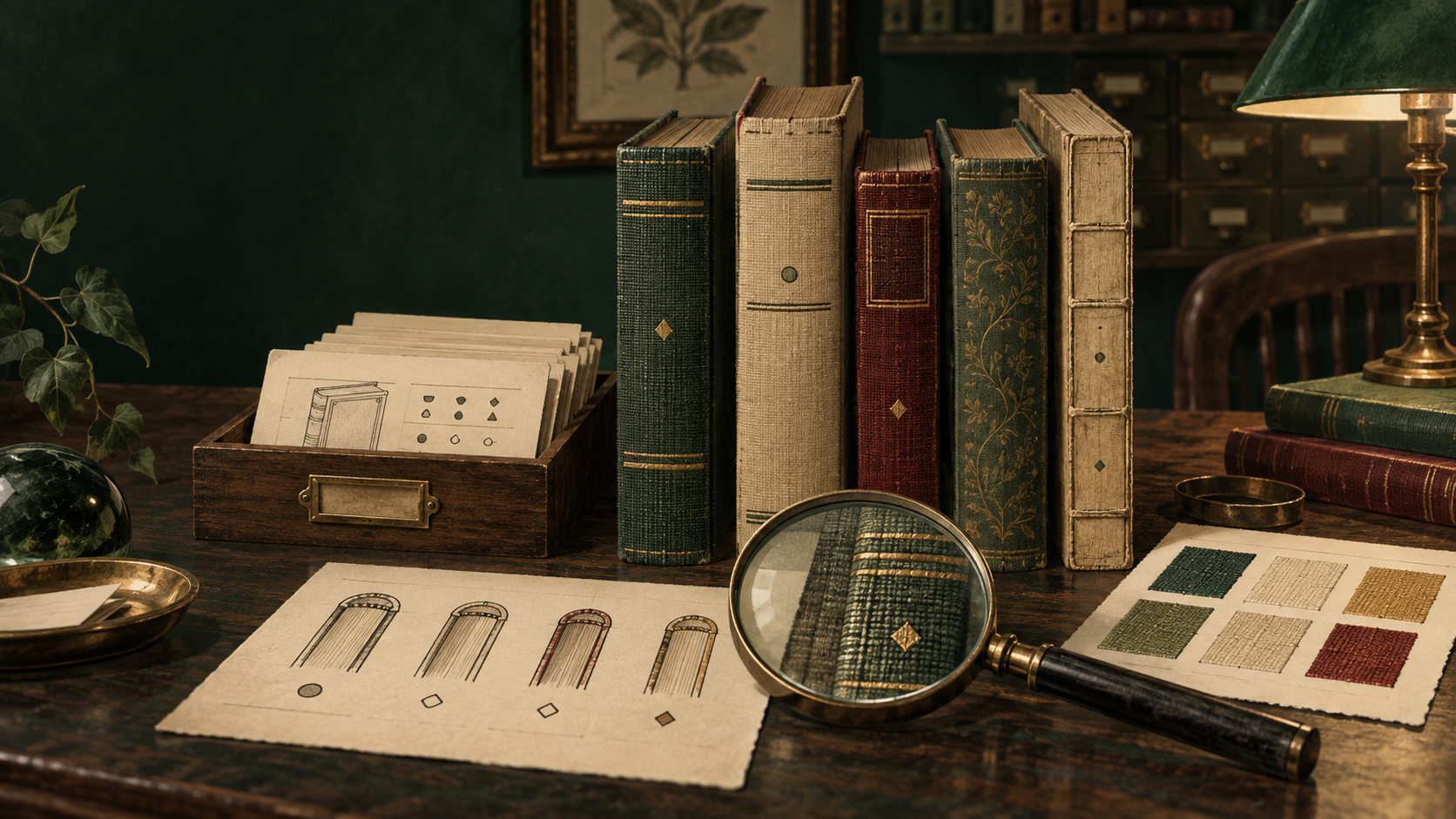
A cover is evidence about an edition, not a permanent portrait of a work. The same novel can acquire a new image for a paperback release, a film tie-in, a translation, a school market, or a reprint. Treating a remembered cover as a clue to publishing history is more reliable than treating it as an answer.
Separate the work from the edition
A work is the underlying text; an edition is a particular published manifestation of it. The distinction matters when a cover is your strongest memory. A title may have many ISBNs, publishers, formats, and release dates, all attached to one work.
Start with what the physical object looked like: hardback or paperback, approximate height, dust jacket, foil, an author photo, illustration style, a series mark, and the language. Then note what you actually saw. “A green cloth cover with gold decoration” is evidence; “probably a nineteenth-century classic” is an interpretation.
Look for details that survive redesigns
Color changes easily. More durable edition clues include the publisher’s imprint, translator, illustrator, series name, format, ISBN, price, and publication date. Even a fragment of an imprint logo or a library sticker can narrow the field.
When you compare images online, ask three questions:
- Is this a scan of the same format I held?
- Does the record name an edition, not merely the title?
- Is there a second catalog record that agrees on publisher, date, or ISBN?
Library catalogs and structured book databases are better suited to these checks than isolated marketplace thumbnails.
Build a small edition timeline
Make a row for each promising edition: publisher, place, date, format, identifier, and cover feature. A timeline will often explain the mismatch. A 2008 paperback may use the image you remember even though the work first appeared decades earlier. A translated edition may carry different artwork and a different subtitle.
If the memory is tied to a passage rather than the object, keep the edition timeline but verify the wording in How to Check a Half-Remembered Book Quote. If it is tied to a scene, preserve that scene separately using Turn a Reading Memory Into Useful Clues.
Avoid the common traps
Do not infer a publication year from the visual style. Do not assume the cover art depicts a literal event in the story. And do not use a retailer image as the only source: listings may reuse a generic cover while selling another printing.
The best result is often modest: “This looks like a UK paperback from the early 2000s, published by this imprint.” That is a strong, testable lead—and much more useful than forcing a cover memory to settle the whole question.
Record the cover as fields, not an impression
Write the cover down before comparing images. Split the observation into material, layout, and publication fields. Material includes cloth, gloss, matte laminate, embossing, dust jacket, and page-edge colour. Layout includes the position of author and title, full-bleed illustration, and any series badge. Publication fields include language, currency, library markings, price, and an imprint fragment. These details make clear what can actually be verified.
Compare records before images
Begin with records that identify a specific edition. Match contributor, publisher, date, format, and identifier first; compare the image second. Retail listings can attach a representative cover to another printing, while a library record may identify the physical item without a cover scan. When records disagree, write down the disagreement: it may signal a regional issue, later printing, revised translation, or cataloging error.
Test mismatches deliberately
Absence matters only when a source should contain the detail. A record listing a paperback with a named illustrator is meaningful negative evidence if you remember a cloth hardback; a record with no image proves nothing about artwork. For every attractive match, write one disconfirming test: date after you read it, incompatible language, or different series. That keeps the research from becoming a hunt for resemblance.
Retain an edition trail
For each promising edition, keep its permanent record link alongside work title, author or translator, publisher, place, date, format, ISBN, and cover note. Compare it with the original memory note, not a memory already altered by search results. If no record fits, widen the date range and inspect adjacent editions. The cover opens the investigation; the bibliographic trail should close it.
Add provenance to every observation
When possible, write where a memory came from: a physical copy, a library scan, a friend’s description, or an image seen years later. Provenance changes how much weight a clue deserves. A note made while holding the book is different from a colour remembered after seeing hundreds of similar covers. Keep the original observation unchanged, then add later discoveries underneath it with a date.
This version history is useful when research takes several sessions. It shows which facts were present before a candidate appeared and which were inferred afterward. If a later source contradicts the note, preserve both entries and explain the conflict rather than silently rewriting the past.
Understand identifiers and relationships
An ISBN usually identifies a particular format and publication, not an entire work. Older books may have no ISBN; a catalog control number or publisher record can still identify the item. A translated edition may have its own ISBN and title, while a series record may group several volumes under a shared design. Check translator, editor, illustrator, and adapter fields when a cover and description do not resemble the first edition found.
Use image evidence responsibly
Save a source URL and the date you viewed an image. Image search does not guarantee the correct edition first, and crops or colour changes can come from scans, sellers, or thumbnail services. Compare distinctive placement and material details, but use the bibliographic record—not visual similarity—as final authority.
Sources
- Open Library Search API — work- and edition-level fields returned by search.
- Library of Congress Catalog — independent bibliographic catalog records.
- Library of Congress search help — search guidance, including ISBN lookup.
- Google Books API: Using the API — documented title, author, publisher, and ISBN query operators.