
10 Must-Read Books to Start a Lifetime of Reading
Searches for must read books often promise a definitive shelf: ten titles that every person ought to finish. That promise is too neat. Reading is shaped by language, place, time, access, and the questions a reader brings to a book. A good list should open doors, not police a canon.
This is therefore a starting library rather than a ranking. These ten books move through comedy, historical fiction, speculative fiction, epic, and social critique. Together they offer different narrative forms, different historical pressures, and different ways of seeing power, family, desire, survival, and home. Each recommendation includes a publisher-supplied cover image for one available edition; editions and translations vary, so use the image as a guide to the edition discussed, not as the only “correct” cover.
How to use this must read books list
Choose by curiosity, not duty. If a book feels like a wall after fifty pages, pause it and try another path. The best reading life includes rereading, abandoning books that do not meet you at the right moment, and returning later with more context. For older books in particular, a short introduction or a well-annotated edition can make a substantial difference.
Content also matters. Several choices below portray slavery, racism, sexual violence, coercion, war, authoritarianism, or other forms of harm. Those subjects are named so you can choose the right time and format. Reading a challenging book is not a test of virtue; it is an invitation to pay careful attention.
1. Pride and Prejudice by Jane Austen
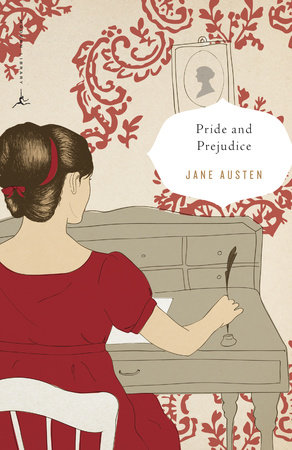
Pride and Prejudice is an ideal entry point for readers who think a classic must be solemn to be important. Its engine is not merely the courtship of Elizabeth Bennet and Mr. Darcy; it is Austen’s alertness to money, inheritance, reputation, family pressure, and the comedy of people misreading one another. Elizabeth’s judgments are sharp, but the novel’s great trick is that it asks her—and us—to examine how confidence can become a blind spot.
Read it for the dialogue and the social chess. A first-time reader does not need to memorize every relation or estate. Notice instead who has economic freedom, who is forced to perform politeness, and how a seemingly small visit or letter can change a household’s future. The novel rewards slow attention, but it is also funny on the surface.
It suits readers who want romance with argument, social observation, and a brisk plot. The language is early nineteenth-century English, yet it is more immediately readable than its reputation suggests. A brief introduction can help with inheritance rules, but skip introductions that reveal the ending. The Modern Library edition page identifies the publisher edition shown above.
2. Beloved by Toni Morrison
Toni Morrison’s Beloved is indispensable not because it is “difficult” but because its form is inseparable from what it remembers. Set after the American Civil War, the novel follows Sethe, a formerly enslaved woman whose home and family are haunted by a past that cannot be contained by a simple timeline. Morrison shifts perspective, repeats images, and lets memory arrive in fragments. That structure asks the reader to feel how historical violence unsettles language, intimacy, and selfhood.
This is a book to read with patience and care. Do not rush to resolve every voice on the first pass. Keep track of who is speaking, and notice when a detail returns with a different emotional charge. The force of the novel comes from its precision as well as its lyricism: domestic objects, names, and acts of care carry enormous weight.
It is best for readers ready for an emotionally intense work about slavery and its aftermath; it includes traumatic violence and grief. Reading with a discussion guide or a trusted companion can be valuable. The publisher’s edition page documents the edition whose official cover is used here.
3. The Great Gatsby by F. Scott Fitzgerald
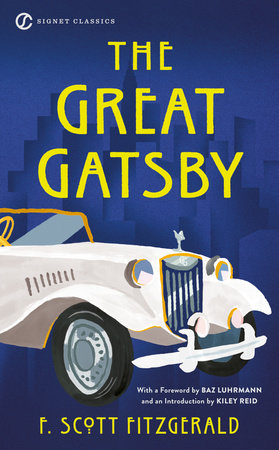
At under 250 pages in many editions, The Great Gatsby can look like an easy classic. It is concise, but not slight. Through Nick Carraway’s observant and compromised narration, Fitzgerald builds a story about spectacle, aspiration, class, and the gap between an invented self and a livable life. Gatsby’s parties are memorable because the novel keeps asking what their glitter conceals.
Read it twice if you can: once for momentum, then once for Nick. On a second pass, ask what Nick knows, what he admires, and what he edits out. Pay attention to geography—East Egg, West Egg, the city, and the valley of ashes—as a map of social distance. The famous symbols work best when treated as parts of a concrete world rather than as riddles to decode.
This is a strong choice for readers who want a short, layered novel or are returning to a book assigned in school. Its treatment of race and gender reflects its period and deserves discussion rather than dismissal or uncritical acceptance. See the publisher’s book page for the displayed official cover and edition details.
4. 1984 by George Orwell

George Orwell’s 1984 remains useful because it is more than a collection of political slogans. Winston Smith’s life in Oceania is shaped by surveillance, manufactured scarcity, altered records, and a language designed to make certain thoughts harder to form. The novel’s lasting question is not simply “Could this happen?” but “What habits make people vulnerable to a world in which truth can be administratively rewritten?”
Approach it as a novel of fear, bureaucracy, and compromised private life, not as a prophecy key. Orwell’s invented institutions are memorable, but the emotional center is the pressure on friendship, desire, memory, and ordinary speech. Note the difference between information being unavailable and people being trained not to trust their own experience.
This is a good pick for readers interested in politics, media, and dystopian fiction. It contains imprisonment, torture, and psychological coercion. Pairing it with a contemporary essay or a conversation about propaganda can deepen the experience without flattening the book into a topical analogy. The Everyman’s Library edition page is the source for the cover above.
5. The Handmaid’s Tale by Margaret Atwood
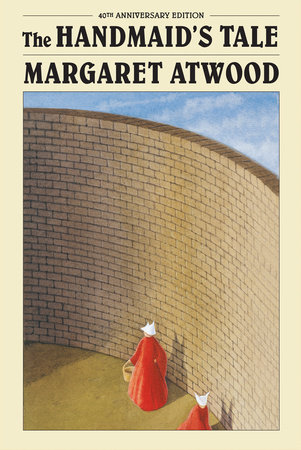
The Handmaid’s Tale follows Offred in Gilead, a theocratic regime that assigns women rigid roles and treats reproduction as state property. Its power comes from the tension between intimate narration and institutional control. Offred’s voice preserves jokes, ambivalence, desire, and memory even while the world around her tries to reduce a person to a function.
Many readers know the adaptation first. The novel is still worth meeting on its own terms because its pace, gaps, and unstable acts of storytelling are part of the argument. Watch how the text distinguishes what Offred sees, what she remembers, what she imagines, and what she cannot safely say. Those choices make narration itself a form of survival.
Choose this if you want speculative fiction that stays close to one consciousness rather than offering a broad future history. It includes sexual coercion, reproductive control, violence, and religious authoritarianism. The Vintage edition page confirms the publisher cover used in this article.
6. The Left Hand of Darkness by Ursula K. Le Guin
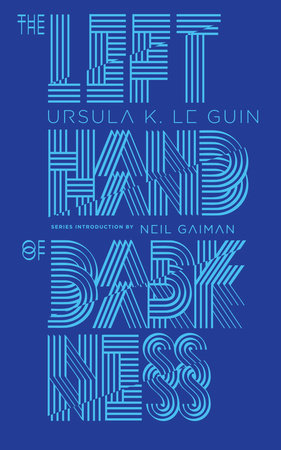
Ursula K. Le Guin’s The Left Hand of Darkness begins with an envoy arriving on the cold planet Gethen, where inhabitants are not permanently assigned a gender. That premise is not a thought experiment with a single answer. Le Guin uses diplomacy, travel, myth, and failed understanding to test the assumptions the envoy carries with him. The result is a novel about translation—between bodies, cultures, political systems, and friends.
Give its opening room to breathe. The early political names and customs may feel distant, but the novel deliberately makes the visitor’s certainty unstable. The middle and final sections gain force from that slow work of estrangement. Its embedded myths and reports are not detours; they show how a culture tells itself what it is.
This is for readers who enjoy literary science fiction, anthropology, and big questions handled through character. Some terminology reflects the period in which the novel was written, and contemporary readers may want to discuss its limits alongside its achievements. The Penguin Classics edition page supplies the official cover image.
7. The Odyssey by Homer, translated by W. H. D. Rouse
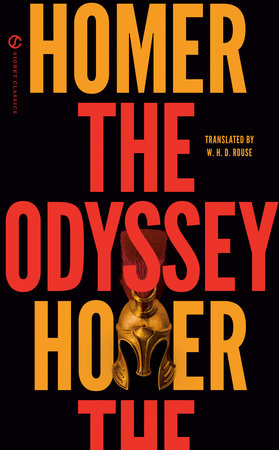
An epic can feel remote until you notice how much of The Odyssey is about recognizable human problems: wanting to get home, telling stories about oneself, managing guests and strangers, enduring loss, and returning to a life that has changed. Odysseus’s voyage is full of gods and monsters, yet its central tensions are domestic and political. Who belongs in a household? What does loyalty cost? Can a person return unchanged?
Translation is part of the reading experience, not an obstacle to get past. Different translators make different decisions about speed, tone, verse, and familiarity. The W. H. D. Rouse translation shown here is one route; sample another translation if its voice does not suit you. Reading a short introduction to Greek hospitality and oral epic can help, but the poem’s scenes are built to carry a reader forward.
This choice fits adventure readers, myth lovers, and anyone curious about a foundational work that is still alive in later stories. It includes warfare, enslavement, and violence. The Signet edition page lists the publisher edition pictured above.
8. The Color Purple by Alice Walker
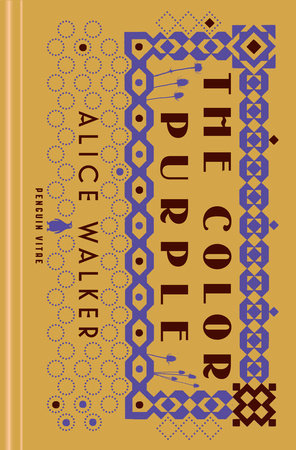
Alice Walker’s The Color Purple is told through letters, a form that lets Celie build a language for experiences she has been denied the power to name. The book moves through abuse, separation, friendship, work, faith, sexuality, and the difficult work of becoming able to imagine a different future. Its epistolary structure makes each shift in address matter: a letter always implies both a speaker and someone hoped for on the other side.
Read for the development of voice. Early sentences may look simple, but their grammar, rhythm, and emotional range change as Celie’s world changes. Also notice the network of women around her; the book’s vision of freedom is not only individual escape but the creation of relationships in which people can speak and be heard.
This is for readers seeking a powerful, accessible novel with formal purpose. It contains sexual assault, domestic abuse, racism, and trauma, as well as moments of tenderness and renewal. The Penguin Classics edition page provides the official cover shown here.
9. Dune by Frank Herbert

Frank Herbert’s Dune is often described as a vast science-fiction adventure, and it is one. It is also a book about ecology, resource extraction, religious charisma, imperial power, and the danger of treating a leader as inevitable. On Arrakis, water is political, spiritual, and practical; the world-building matters because it governs every decision the characters can make.
The most rewarding way to begin is to let unfamiliar terms accumulate rather than stopping for every one. Use the glossary when a word blocks the scene, not as homework before chapter one. Ask who benefits from each prophecy or legend, and whose labor makes the grand political story possible. Those questions keep the novel from becoming only a map of houses and titles.
Pick Dune if you want a long, immersive novel with ideas to argue about after the plot ends. It contains warfare, colonialism, messianic politics, and violence. The publisher’s Dune series page identifies the official edition family from which the cover image was sourced.
10. Frankenstein by Mary Shelley
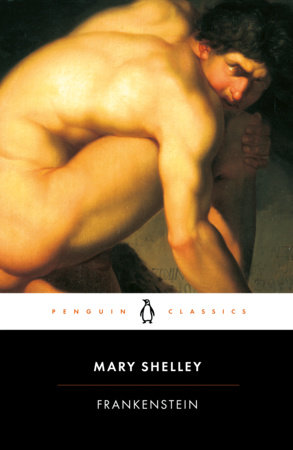
Mary Shelley’s Frankenstein is a sharp correction to the popular shorthand that turns it into a simple monster story. It is a novel of creation and abandonment: Victor Frankenstein makes a living being, recoils from responsibility, and then tries to treat the consequences as someone else’s problem. The creature’s demand is not merely to be feared; it is to be recognized as a thinking, feeling being shaped by rejection.
The nested narration is central. Victor tells a story to Walton, the creature tells a story within Victor’s account, and each narrator asks for sympathy. Read with an eye on who gets to frame events and who is judged from a distance. The book also connects ambition to isolation, asking what happens when discovery is separated from care.
It works for readers who want a compact Gothic novel with philosophical reach. It contains death, revenge, isolation, and violence. Editions differ: the 1818 and 1831 texts are not identical, so check which version your copy uses. The image above is a Penguin Classics publisher cover.
Build your own essential shelf
No ten books can represent the world’s literatures, and a useful must read books list should make that limitation visible. Let this list lead outward: read authors in translation, seek work from regions and traditions not represented here, follow a translator or a small press, and ask librarians or booksellers for books that speak to a particular interest rather than to an abstract idea of “being well read.”
A practical next step is to choose one short or immediately appealing book, one demanding book, and one book outside your usual genre. Keep a small note after each: What did it make you notice? Which voice stayed with you? What would you read beside it? That record turns recommendations into a reading life rather than a completed checklist.
Sources
- Penguin Random House: Pride and Prejudice
- Penguin Random House: Beloved
- Penguin Random House: The Great Gatsby
- Penguin Random House: 1984
- Penguin Random House: The Handmaid's Tale
- Penguin Random House: The Left Hand of Darkness
- Penguin Random House: The Odyssey
- Penguin Random House: The Color Purple
- Penguin Random House: Dune series
- Penguin Classics: Frankenstein cover